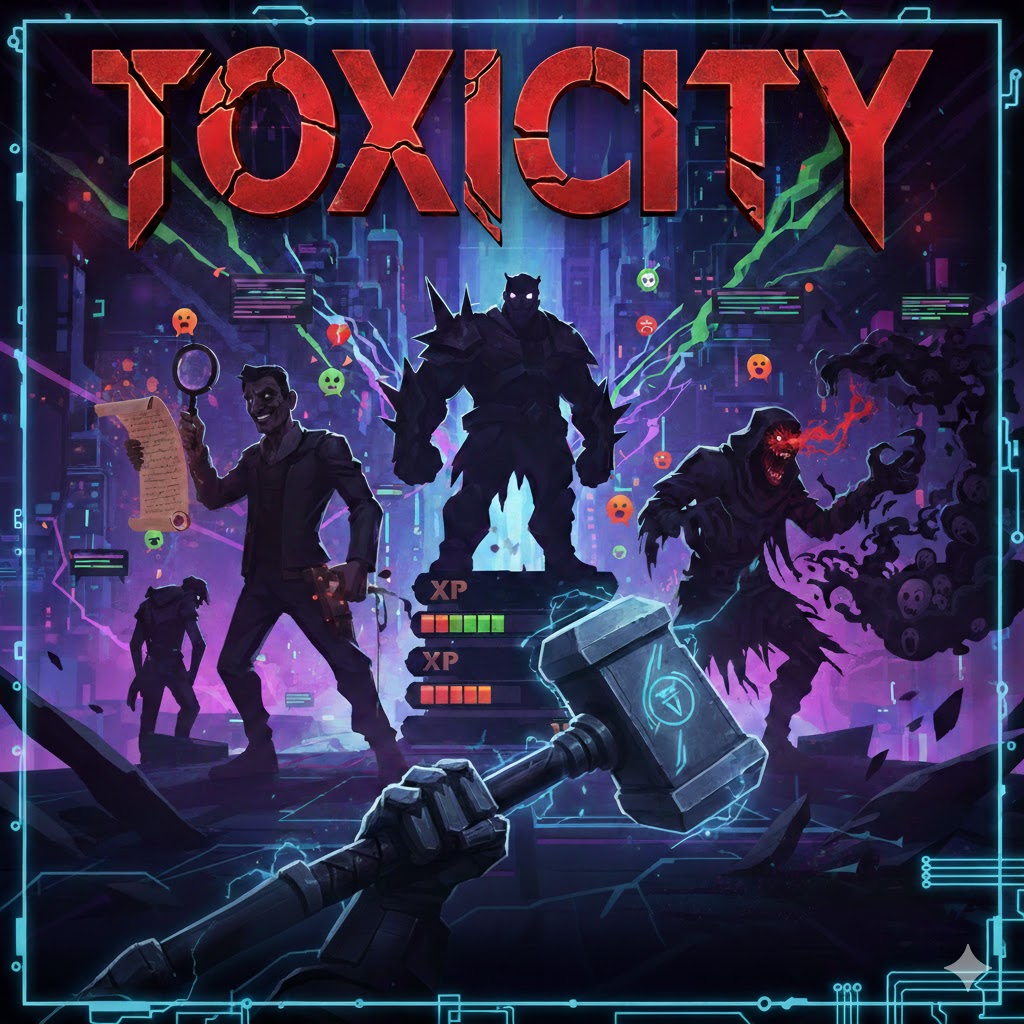
In the contemporary landscape of interactive entertainment, a studio’s greatest asset—and its most volatile liability—is its community. We often throw around the term "toxic" as a catch-all descriptor for any friction within a digital space, but to manage a community effectively, one must move beyond generalisations. True community stewardship requires the surgical precision to distinguish between a "disappointed idealist" and a genuine bad actor.
Defining the Toxicity Gradient
A truly toxic community is not merely one where people argue; it is an environment where corrosive behaviour has become the default setting, stifling growth and alienating new arrivals. However, we must be careful not to mislabel the "Legitimately Aggrieved."
These individuals are often your most passionate players. They are the idealists whose high expectations have been met with perceived failure. Their feedback may be blunt, unpolished, or even heated, but their intent is rooted in a desire for the game to be better. These are not toxic elements; they are convertible assets. With constructive engagement and transparent communication, these players often become your most loyal advocates.
In contrast, toxicity is defined by intent. It is the deliberate attempt to diminish the experience of others for personal gratification or perceived dominance.
The Unholy Trinity: Three Archetypes of Disruption
To maintain a healthy ecosystem, we must identify and categorise the specific strains of toxicity that threaten it.
1. The Pedantic Sophist (The "Rules-Lawyer") This individual is perhaps the most exhausting to manage. They treat the Terms of Service not as a code of conduct, but as a puzzle to be solved. They dance on the razor’s edge of the rules, engaging in "malicious compliance." They disrupt the peace while loudly proclaiming their innocence, weaponising the very guidelines meant to protect the community. When moderated, they pose as victims of "censorship" or "inconsistent enforcement."
The Strategy: Do not get bogged down in a public debate over semantics. Your guidelines should include a "spirit of the community" clause. When they breach the intent of the rules, act decisively. Address the behaviour, not the technicality.
2. The Gatekeeping Elitist The Elitist views the game through a lens of exclusionary meritocracy. They quickly form cliques to enforce "proper" ways to play, ruthlessly mocking anyone who falls short of their arbitrary standards. Their refrain is a tired one: "You haven't put in the hours, so you have no right to an opinion." This hierarchy creates a stagnant, inhospitable environment that kills player retention.
The Strategy: Champion the "Casual." Celebrate diverse playstyles in your official communications and ensure your moderation team actively shuts down "skill-shaming." Make it clear that tenure does not grant a license to harass.
3. The Malevolent Disruptor (The "Monster") This group represents the purest form of toxicity. They have no interest in the game’s mechanics, its lore, or its future. They are "Agents of Attrition" who enter a space solely to inject vitriol, bigotry, and nihilistic negativity. They thrive on the "shock factor" and the exhaustion of others.
The Strategy: Zero tolerance. There is no nuance here to be found, and no soul to be saved. These individuals are the primary candidates for the "Banhammer." Swift, permanent removal is the only way to prevent the rot from spreading.
The Studio’s Sanctuary: Curating the Space
A gaming studio must view the channels it controls—be it Discord, official forums, or in-game chat—as a curated sanctuary. It is a fundamental error to believe that a community will "self-regulate" into a positive state. Left to its own devices, a community will often default to the loudest, most aggressive voices.
The Pillars of a Healthy Sanctuary:
Transparent Robustness: Guidelines must be crystal clear, but also flexible enough to address the vibe of the community.
Active Stewardship: Moderation is not a passive task; it is an active presence. It requires "Human Intelligence" to spot the difference between a frustrated fan and a bad-faith actor.
The Moral Compass: A studio must be unafraid to take a stand. By tolerating elitism or "edgy" toxicity, you are inadvertently endorsing it.
Conclusion: The Mercy of the Banhammer
While the goal is always conversion and education, there comes a point where the health of the collective outweighs the presence of the individual. We should not fear the "Banhammer." When wielded correctly, it is not an act of aggression, but an act of mercy for the thousands of players who simply want to enjoy the world you’ve built without being subjected to a cacophony of malice.
Cultivate your idealists, ignore the pedants, and excise the monsters. Your community’s longevity depends on it.